


Celtic Handfasting Explained: Meaning, History & How to Include It in an Irish Wedding

What Is Celtic Handfasting?
Celtic handfasting is an ancient wedding ritual rooted in Irish and Celtic tradition. During the ceremony, the couple’s hands are gently bound together using a cord or ribbon, symbolising the joining of two lives, hearts, and futures.
The phrase “tying the knot” originates from this ritual, making handfasting one of the most meaningful and symbolic wedding traditions still used today.
Handfasting is now widely embraced in Irish weddings — from traditional and spiritual ceremonies to modern civil celebrations.
The History of Handfasting in Ireland
Handfasting dates back centuries and was originally used as a form of engagement or trial marriage in Celtic cultures. Couples would bind their hands together to represent commitment, intention, and trust.
Over time, handfasting evolved into a deeply symbolic ritual that celebrates:
Love and unity
Equality between partners
Shared intention and future
Today, Celtic handfasting honours Irish heritage while allowing couples to personalise their ceremony in a modern and meaningful way.

What Does a Handfasting Cord Symbolise?
Each handfasting cord carries powerful symbolism:
The cord represents strength, protection, and connection
The binding symbolises unity and partnership
The knot represents an unbreakable bond
Many couples choose colours with personal meaning:
Green for Irish heritage and growth
White for purity and new beginnings
Gold for prosperity and commitment
Red for love and passion
Personalised Celtic Handfasting Cords for Irish Weddings
Choosing a personalised Celtic handfasting cord allows couples to incorporate intention, symbolism, and individuality into their ceremony.
Handmade handfasting cords created in Ireland offer:
Superior craftsmanship
High-quality materials
Meaningful colour combinations
A keepsake to treasure after the wedding
How to Include Handfasting in Your Wedding Ceremony
Handfasting can be included in many types of weddings, including:
Religious ceremonies
Civil ceremonies
Pagan or spiritual weddings
Outdoor and destination weddings
The ritual usually takes place after vows are exchanged, but it can also be used as part of the vow process itself.
Many couples choose to keep their handfasting cord as a keepsake or display it in their home as a reminder of their commitment.
Combining Handfasting With Other Wedding Unity Rituals
Handfasting pairs beautifully with other symbolic wedding traditions.
Handfasting and Unity Candles
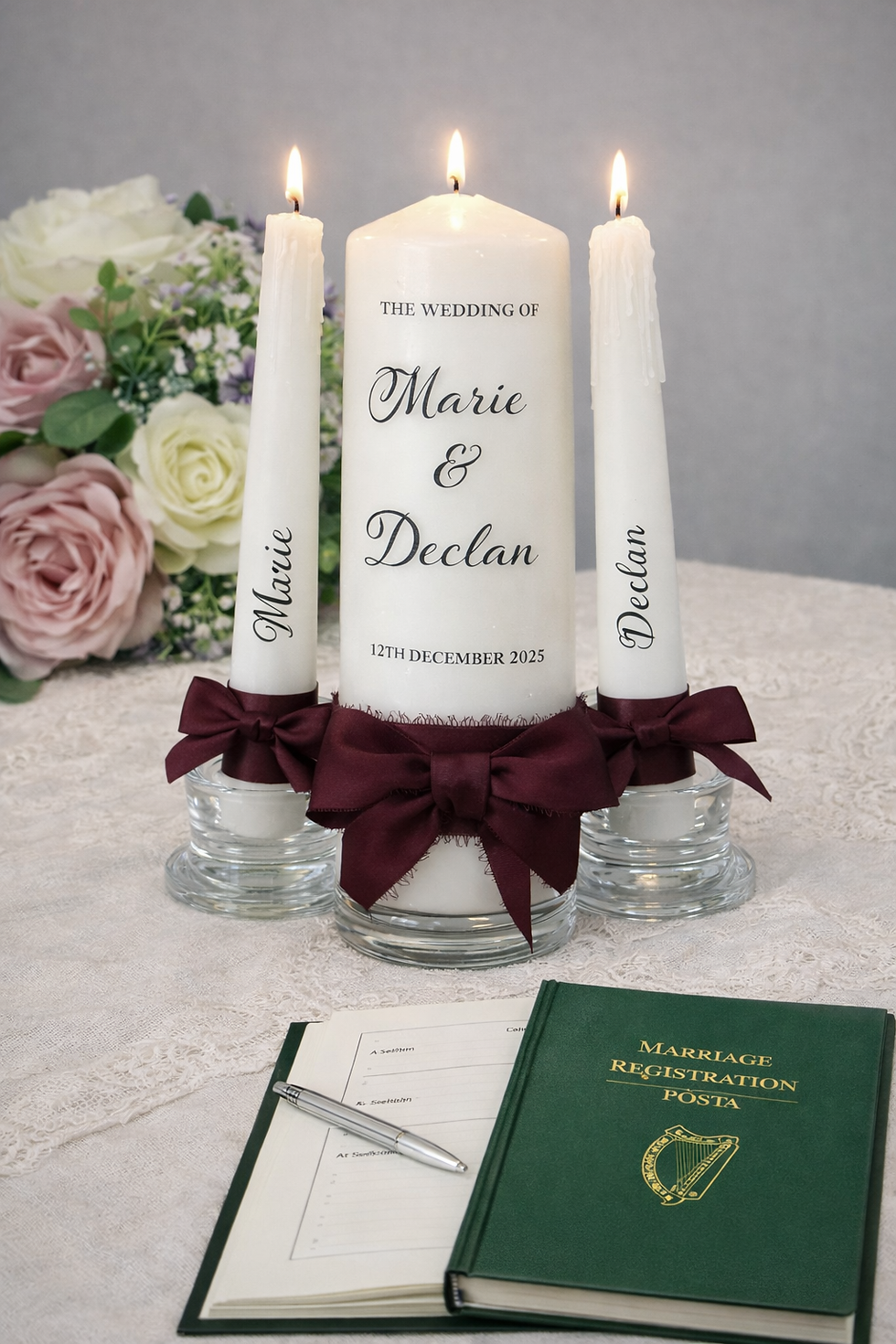
Lighting a unity candle after handfasting represents the spiritual and emotional bond created during the ceremony.
Handfasting and Sand Ceremonies
Combining handfasting with a sand ceremony adds a visual and inclusive element to the ritual, especially for family-focused weddings.

Is Handfasting Suitable for Modern Weddings?
Absolutely. One of the reasons handfasting has become so popular in Ireland is its flexibility. It can be:
Deeply traditional
Lightly symbolic
Spiritual or non-religious
Fully personalised
Handfasting allows couples to honour Irish heritage while creating a ceremony that reflects who they are today.
Choosing the Right Handfasting Cord
When selecting your handfasting cord, consider:
Colour symbolism
Material quality
Length and flexibility
Craftsmanship
A handmade handfasting cord created in Ireland ensures authenticity, quality, and a meaningful keepsake for years to come.
A Tradition That Connects Past, Present & Future
Celtic handfasting is more than a ritual — it is a powerful expression of love, unity, and intention. Whether you’re planning a traditional Irish wedding or a modern ceremony with Celtic roots, handfasting offers a deeply telling moment that guests will remember forever.
Explore our Celtic handfasting cords
Copyright © I DO FOR YOU.
This content may not be reproduced, republished, or adapted without clear written permission and visible credit to I DO FOR YOU (www.idoforyou.ie).

Comments